creative writing

The Midnight Ballet

“Where were you last night?” she asked Malcolm, picking him up by the stomach and holding him against the familiar soft fur of her dressing gown. As she stroked his cheeks, his ears and expertly under his chin, he reflected on her question, obediently purring.

Of course, it all started with the ginger tab, recently moved in two streets over. Malcolm had been picking up that strange, foreign scent all of yesterday on his daily prowl over his domain, Baker Street to Whiteshilling Way. He decided to go out that night. He only occasionally did this, to keep the other neighbourhood cats on their feet. Usually he liked spending time with his human at night time: It was night time when they had taken his brother away from the pack. They had been closest, playmates. But when he woke up, his brother was gone. When she was asleep, he’d keep an open eye on the house: setting up patrols. For good measure he’d run laps to keep himself awake, especially before settling down for a few minutes on the bed. He liked to check up on the human. To make sure she was still warm and breathing. But last night, he had ventured out.

The cat flap passed over his head and he gracefully leapt up the garden wall. Malcolm barely registered what he was doing: He had lived here for almost as long as he could remember, after he lost his brother. Instead, he was preoccupied contemplating his furry little problem. All the cats in the neighbourhood knew how things were. Every cat each had their own quarter. Admittedly some larger than others, but how else would you know who ran things around here? It’s every cat for himself nowadays. His own quarter was not the largest, but considerable enough to be avoided by his neighbours. Over time, he had worked hard expand around his plot, reducing that of the cats around him. Reputation was important. It kept things ticking over soundly. Keeping other cats away from your human in the street. They knew Malcolm wasn’t to be messed with. So tonight, he’d have to show the new cat in town the way things worked around here. 

There he saw it. Over on the fence of three doors down, an orange flash of bushy tail. On his territory. Something had gone into the nice old lady’s lawn. She always left out her left overs for him every other day without fail. Usually no one would dare touch his food, so it was alright until early morning – before the birds started snooping around. Usually he’d kill a particularly brave one for effect but there’s only so many times you can do that before it gets boring. Easy prey. Occasionally, swatting the odd unsuspecting victim and sinking your fangs in as they squirm has its perks. It certainly left his mark in the neighbourhood. Still, as he slinked across the little maze of fence tops, he saw the ginger newbie go in for the kill. On his left-overs bowl.

He pounced, and the ballet began. Soundlessly, the air barely fluttering against his ears, he flew down from the fence. Landed on his front two paws, he pulled his hindlegs through and started to sprint towards the ginger. His back to him, unknowing of the danger gathering pace behind him as he tucked into the gravy covered chicken. Only the ginger tab’s ears quivered, the ground betraying the slightest vibration. The light pounding of feet. The tab barely registered this information before something shot into his back. Pinning him to the ground. A stomach-wrenching war cry filling his ears.

Right off, Malcolm sensed something jarring. His readiness to cat fight, claws out-stretched in the cool night air, paused. He saw the tab’s face. A jolt of familiarity sparked in Malcolm. What’s more, the tab’s wide headlamp eyes spoke of something more than fear: Recognition. The two felines were poised like statues for what could have been an age, Malcolm pinning the helpless ginger tab beside the bowl of leftovers, the other paw splayed open above his head. The smell pausing the whole scene. Something faintly resonated from somewhere deep. Something old and important lay within this cat’s scent. Never had Malcolm felt anything as deep and overarching as this before, as if a thread was gently pulling him towards this cat.

            “Brother?” The ginger cat said, relaxing under his grip slightly. Malcolm was speechless, his mouth lolling open. He too, slackened his hold. “Is it you, brother? It is, isn’t it?” The tab rolled back over on his paws, coming to Malcolm’s eye level.

            “You… can’t be,” Malcolm was aghast. After all these years. 

Miscellaneous

In a Man’s World

Hearing Caroline Criado Perez on the radio this week (yes, Radio 4, because I am essentially an old lady) has opened my eyes to the world in a way I would never have expected. Her book, Invisible Women, exposes subtle ways First World countries have permitted a startling gender bias to lie dormant: in plain sight.

50% of women in car accidents are more likely to sustain serious injury

Perez throws a splash of realism onto the world, revealing to what extent female needs have been overlooked. Her study of data bias reveals to what extent the world is designed for men: how phones are too big for women’s hands, fundamental army equipment being unsuitable for women, and even office environments being tailored to the male metabolic resting rate. But perhaps most concerning is her research into car crash dummies. European regulations require only the ‘Reference Man’ dummy to be used in simulated crash tests in order to determine the safety rating of a car. ‘Female’ dummies are merely scaled down male ones; an inadequate representation of the female physiology. Moreover, this scaled-down dummy is only required to be used once in the passenger seat in five tests. This exposes an invisible world of ‘gender-blind’ policy. Alarmingly, as a result 47% of women in car accidents are more likely to sustain serious injury. What does this imply? Decision-makers do not agree with female drivers and are secretly killing them off? Women are less valuable than men? It is a hard fact to swallow when you consider its implications.

And there is more. Medical trials misrepresent the female body. Specifically heart failure trials tend to use male participants. Resultingly, women are 50% more likely to be misdiagonised following a heart attack. This ‘one-size-fits-men’ approach, Perez describes, has even taken a hold of technology. The emblem of the future. VR headsets are more likely to make women sick; speech-recognition software is 70% more likely to recognise the male voice; and most prevailently, smartphones are too long for the female hand span.

This is a world where we are in the Third Wave of feminism and the Me Too movement. In December 2018, a record-breaking 71.4% of women in employment. However:

  • 41% of employed women are part-time compared to 13% of men.
  • On average, full-time women earned £509 a week, whilst full-time men earned £100 more.
  • 17.9% gender pay gap is indicative of the higher proportion of female part-time workers.
  • The gap between full-time men and women was only 8.6%.
The Ford sewing-machinist strike of 1968 over unequal pay whereby women effectively worked unpaid for two months a year

Compared to the conditions that led to the 1968 women’s strike at Dagenham’s Ford factory (which I can proudly say my great-grandmother participated in!), we have much improved. Nevertheless, there is very much still room to do better. Overwhelmingly, women choose to go part-time. Often, it takes an empowering decision to juggle child-care with maintaining a career. Yet, I wonder whether if more men stepped up to the mark, how things might be different. I appreciate that gender bias of part-time work will never be 50-50. But if more men were to balance their work life with their family life, perhaps more women in work to represent the female voice would transform the inequalities Perez has unveiled.

I am not a strongly politically opinionated person. Looking at this issue with an inquisitive mind has stretched my view of the data bias against women on this matter. However you stand on feminism: whether you believe it’s gone too far or equality has already been reached, the Invisible Women book starkly outlines issues that need to be addressed. Out of basic humanity, why should one half of the population have better survival rates in a car crash or after a heart attack?

creative writing

Writing Prompts

Sit down in front of your notebook. Close your eyes for a few seconds and take yourself away. Picture your happiest memory; your highest point and warmest feeling. What was around you? How did you come to be there? Were you with anyone? Who was around? Why were you happy? How did it feel? Get it down. Whether you were on the beach, your arms outstretched embracing the wind as it blows through your hair, sprinting down the street in a rainstorm with the love of your life, or opening an envelope, your family looking at you with bated breath. Capture your feelings and how they came to be, bottle them into the page.

On the beach, your arms outstretched embracing the wind as it blows through your hair

Now write about the last time time you cried. Did you cry in front of anyone or were you alone? Where were you? What made you crack? Tell your story. Let it flood out from your memory, down your arm, your hand, through the pen and splash out onto the page. Know that your notebook is your closest friend. It will keep your secrets. Hide it under your mattress if you will, learn to break the seal on what you’re afraid to write. Introduce yourself to your notebook by writting down 10 things nobody knows about you; then 10 secrets you’ve promised to keep; and the top 10 lies you’ve told. This is your initiation. Learn to detach yourself from your bonds of secrecies when you write. Your writing becomes an infallible piece of art, detached from your own world of promises.

You’re warmed up. Now lie. Jot down two big fat lies and a truth. Note down little details. For example, I had:

  1. Once I leaned back on my chair and into my math’s teacher’s crotch. Twice. Without realising: In year nine; my friends were laughing and I didn’t know why; after the first time they told me and I slid down my chair embarassed then stretched back again, hence the second time.
  2. On my first shift working at a theatre I almost spilled wine on Arlene Philips: It was a private event for choreographers and contacts seeing the annual performance of a dance show; she was the first person I had ever served; tripped on something behind the bar but I just saved it; I don’t think she noticed.
  3. My mother once left me trapped in the car for two hours: after doing the shop; I was four-years-old; I banged on the door; it wasn’t locked but I didn’t have the strength to use the door handle.

Tell them to someone. Get them to deduce which one is true and which is a lie. Pretend you’re on Would I Lie To You.

Believable, bizarre, fun and unique

Spoiler: No.1 was my truth (And I’m still mortfied!). As an appalling liar, I like to use white lies. On my first shift I did almost spill wine but it wasn’t on Arlene Philips (although she was around!), and I was once trapped in a car because I wasn’t strong enough to open it but my mother was outside laughing. My point is, if you can’t think of where to begin with writing, use what you know. But then distort it. Make it believable, bizarre, fun and unique.

creative writing

Freewriting

So you’ve got the itch to write. You want to tell a story fabricated by your own narrative, interweaving a sense of meaning through the piece with imagery, sense of place and characterisation. It may be intimidating to know where to begin all this. You’ve opened your notebook to a fresh, untainted page, biro in hand. And nothing. Have no fear. There is a simple remedy.

A fresh, untainted page

Controversial opinion: there is no such thing as writers block. Certainly, there are periods where ideas and word don’t seem to roll together and acculumate as easily. But as per my first ground rule (in the previous creative writing post), there is no such thing as bad writing. It is important to write everyday: oil the cogs so to speak. The key is a little thing called ‘freewriting’.

Simply, this is where you just write, pen to paper, non-stop for a set amount of time. Usually I would say 10 to 15 minutes is enough to wet your appetite, but of course keep going if you feel like you are getting somewhere. This may sound intimidating, however it is a highly beneficial and method advocated in many creative writing workshops run by authors of varying forms. Choose a subject to write about: your earliest memory; what you did last week; the weather outside. Get words down on the page and if they don’t come, write ‘nothing’ until they do.

Look around the room. What strikes you?

Not only will this get rid of the scary blank new notebook feeling, it will form the basis of your sense of direction. It sets down the bare bones of something you can build up. For example, when I was writing about my experience of swimming at a young age, I mixed it with another story about a charcter getting drunk for the first time. These culminated into a story about a swimmer competing in a race as she examines her distorted relationship with her coach (which I may publish on here at some point). Think of what you want to write about. Prompts may include:

  • Your own experiences: the first time you rode a bicycle, baking as a young child, your first relationship. They say ‘write what you know’ and memories are the best way to do this (just be ready for them to change as the writing is reworked later on).
  • Evocative objects: look around the room . What strikes you? Pick it up, how does it felt, what does it smell like, how heavy is it, what would happen if you let go of it? If you are struggling to connect with anything, shoes can be extremely evocative. Where have they been, who might where them, what size are they and what does this indicate about the build of their owner?
  • Opening sentences: a strong opening to a story is crucial in order to capture the reader from the word ‘go’. Here are a few that have been extremely effective for me: ‘The key to hiding your identity is not something I will ever understand’; ‘Why did you bring me to the bloody circus?’; ‘They say the first thing you fall in love with are their eyes, but …’. Use these and come up with a few of your own.

Good luck with your writing, you never know where it will take you!

creative writing

The First Page

Welcome to my first creative writing segment. If you’ve read my first blog post, then you’ll know that through a series of fortune events, I accidentally took a creative writing module this semester: and I cannot recommend creative writing enough.

So the chances are, whoever you are, you have some interest in creative writing, however vaguely. For starters, you are reading this blog. If you can read, then you can write. I came into my first creative writing session having not written a story for five years. All it takes is the desire to get something down and to stick with it.

A fresh page

Firstly, I should make clear that there are no rules to writing. It’s a fluid, uncontainable disease. That being said, I have made a quick list of top tips I can wholly recommend if you’re starting out, getting back into writing, or fancy looking over my take on it all.

Read everything you can lay your hands on

Ground rules:

  1. Nothing you write is ‘bad’: Everything you write in the initial stages of storming ideas is useful. Things you don’t like can be redrafted, the important thing is to just get your ideas down on paper and let them take their own shape. You’ll be surprised at how much detail works itself out through your pen onto the paper. Characters fall out, setting, dialogue, storylines. Of course, this won’t happen all the time. The key is to keep going, doing writing exercises, redrafting, getting inside the character’s mind (I will be posting writing prompts and exercises at a later date, keep your eyes peeled).
  2. Try to write everyday, or as much as you can: The only way to improve at something is to practise. Luckily for us, writing is completely free and accessible. Try to write in the morning before breakfast, on your lunchbreak or just before bed. Whenever you have time to spare. Although I would recommend using pen and paper over typing on the computer at first, do what feels best.
  3. Pay attention: Keep your eyes open. Watch the world working around you. Listen to interesting conversations (whilst being mindful of people’s privacy!). Often the best source of inspiration is things that happen to us. Seeing how people and dialogue play out in real life leads to real characters. Notice people’s oddities, what makes them stand out, the first thing you notice about them. For example, when you’re doing your shop at the local supermarket, did you hear the beautiful, strong voice from the next aisle over talking on the phone about her holiday to the Alps and how she climbed the mountains last summer; only for you to find an old woman when you went over? Take your earphones out and listen to the world passing you by.
  4. Read as much as you can: Read whatever you can lay your hands on: newspaper artiles, columns, poems, short stories, novels, essays. Find what you love. Absorb the array of different styles. See how different authors handle their characters, setting, themes. Jot down phrases you like, words that grab your attention, good openings or endings.
  5. No creative writing notebook is neat, a scruffy notebook with ideas is better than an empty one waiting for publishable work to be neatly written out.
Writing prompts: Try to write everyday

Feel the writing itch yet? Grab yourself a notebook. It doesn’t have to be fancy. In fact, the less intimidating the better. Open the first page and see what comes out. (Or keep your ears open for my next freewriting post!)

Antics

All the World’s a Stage

Yesterday evening, I visited Stratford-Upon-Avon to see As You Like It at the Royal Shakespeare Theatre directed by Kimberley Sykes. It starred Lucy Phelps as Rosalind and David Ajao as Orlando. Having never read the play before (despite meaning to), I came out of the theatre doors thoroughly mesmerised by the way the production dealt with the fourth wall: Aside from feeling wholly satisfied by the comedic tangle being resolved by the ‘happily ever after’ marriage(s).

Holy Trinity Church where William Shakespeare is buried

For those who aren’t familiar with As You Like It, it is a comedic romance play written by none-other than William Shakespeare, and is believed to have been performed by the King’s Men theatre troupe to open the Globe in 1599. Orlando is the younger son of Oliver and their father, Roland de Bois has recently died. Oliver treats his sibling harshly and Orlando is left bitter and angry (their servant breaks up a fight between them). He challenges Charles, the court wrestler, to a fight. As a slippery character, Oliver manipulates Charles in the endeavour to injure Orlando. Cue Duke Frederick’s daughter, Celia, and her cousin, Rosalind the daughter of the old Duke recently deposed by the new Duke, who has been permitted to stay at the court. They watch the wrestling match. Rosalind falls in love with Orlando, who beats Charles. Rosalind gives Orlando her necklace to remember her by; and he is also overcome with love. Orlando hears of a plot against him formulated by his brother and retreats to the Forest of Arden. Rosalind is banished from court by the new Duke for no real cause, and Celia joins her cousin on principle. They disguise themselves as Ganymede, a young man, and Aliena, his shepherdess sister, respectively (also joined by Touchstone, the court fool).

Here’s where things get spicy. In the Forest, the lovesick shepherd Silivius pines after a scornful and brash shepherdess, Phoebe. Ganymede takes up the leasehold of an old shepherd’s estate and he and Aliena settle down. Elsewhere, the old Duke and his exiled courtiers live a simple life. A campfire meal is interrupted by Orlando desperate for sustainance for him, but particulaly his servant who is on his last legs. Orlando writes love letters for Rosalind on trees around the forest. Ganymede finds them and Orlando and proposed to cure him of his love. Ganymede poses as Rosalind (who they really are) and makes Orlando woo them in lessons every day. Meanwhile, Pheobe falls for Ganymede, and Silivius still for Pheobe. Touchstone allures a country girl, Audrey, with his courtliness. She abandons her admirer, William, for him.

In another twist, the new Duke notices both Orlando and Rosalind left at the same time, and orders Oliver to seek Orlando out. In the process of this, Oliver is attacked by a lion but Orlando saves him, injuring his arms. Oliver runs through the forest and into Rosalind and Celia, still in their disguises, relating this news. Oliver quickly falls in love with Celia and Rosalind decides to sort this mess out: she makes Pheobe promise that if she no longer loves “him”, she must marry Silivius. Ganyemede reveals himself as Rosalind. So Pheobe marries Silivius. And Touchstone marries Audrey; Oliver, Celia; and Orlando, Rosalind: all under the god Hymen. Orlando’s other older brother comes home from study abroad to relay the news that the new Duke has become a hermit. And all ends happy and good with merry dancing.

Set prior to the first half: Orlando came to swing wistfully as the audience still filtered in three minutes before the show commenced

Not complicated at all (!). This Sykes’ production was liberating and a joy to watch. There were subtle modern twists, such as Audrey being deaf, Charlotte Arrowsmith the first deaf actress in an RSC production: William acted as her interpretter as Touchstone wooed her, which worked effectively in the little side tradegy for William’s heartbreak. Moreover, Silivius was a woman, which acknowledges recent critical renditions in traditional literatures to embrace the modern vision. Indeed, it was pleasing to see an enthically diverse cast in both lead and peripheral roles.

After the first half in the interval: backstage was opened up and the technical team came on stage at points

During the interval, the first half ending with Orlando pinning his love letters around the forest, the actor circulated around the half empty seats discussing what he should write to Rosalind with the audience. Several people were left with his declaration of love on little post-it notes. There are a few moments of audience participation too. Four people were asked to come on stage to hold up letters spelling out Rosalind’s name; a man came on stage wearing a post-it love note jacket; and actors would sit/lie among the stalls at points. There was a moment when Rosalind stormed on-stage unravelling her binder, followed by Celia, ravellling it back up. The Celia actress, Sophine Khan Levy, accidentally pinged the binder and it almost fell. Luckily, both actresses saved it from falling just in time. It was a funny moment of relief for everyone, and again aptly touched the fourth wall. Times when the audience lights came on indicated these liberating, free-flowing moments in the play; interspersed with satisfyingly dramatic monologues for which audiences flock to theatres half a millenium after they were written.

In all, after watching this funny, light-hearted, gender fluid play, I am inclined to wonder whether this could be my new favourite Shakespearean play. without sounding too pretentious, of course. But I can recommend this production of As You Like It to you (running until 31st August at Stratford).

Antics

Laptop detox

Last Thursday, I went home for long weekend to break up the four days of no contact hours I have this semester. Much to my mortification when I unpacked, I realised I left my laptop charger at home. Anyone who knows me, knows how important my laptop is. I rarely go anywhere without it. And why wouldn’t you when it provides reading, writing, university work, access to any information readily available at the touch of a fingertip? So the prospect of four, suddenly very long days stretching ahead felt very daunting. Luckily I had prepared my work for the following week in advance, so the 80% battery ration was not overly critical. My weekend went very differently laptop-free.

Lemon and white chocolate Victoria sponge with scraped icing around the sides

Within an hour of being home, I started baking. I made a lemon and white chocolate Victoria sponge with scraped icing around the side. This was partially spurred on by the horrendous state of our uni kitchen (despite personally deep cleaning it two or so days before…). It felt liberating to be able to create something with a free range of preparation space.

Listening to the impact of another failed Brexit vote on Radio Four (yes I am an elderly woman), I modified this recipe. with fresh lemon juice and zest, a hint of white chocolate grated into the batter and icing, and replacing jam with lemon curd. It was really nice to surprise my parents with cake when they came home from their day!

This spurt of baking escalated. The good feeling from this initial cake lead to cheesecake and flapjacks (after watching the Stand Up 2 Cancer Bake Off):

The flapjacks were a little crumbly, and I would follow Paul Hollywood’s advice of adding more than 2-3 tablespoons of golden syrup to hold everything together and let the outside caramelise more. Again, I used the white chocolate and lemon flavours for my cheesecake. This was also a little crumbly, the biscuit base falling apart over time. Whilst not overloading the base with melted butter, next time I will be adding more than the recipe uses; but the main body is perfectly creamy! The firmer you would prefer the cheesecake, the longer you leave it in the fridge to set. Making these were a nostalgic and fun experience, much more engaging than filling time up on my laptop.

Over the weekend, I saw both my grandparents. These visits spurred on my final two cakes, coffee and a marble cake:

You really can’t see the full effect of the marble sponge here, but simply separating the batter into two and adding chocolate and vanilla respectively makes a massive visual difference. It was lovely to give my grandparents the cakes too. I realised that between uni and my grandmother’s walking holidays, I hadn’t seen her so far this year. It was really enriching for us to catch up: I got to see her new yellow/orange MINI and Maurice (whom you may recognise from my first post) and Mavis Davies.

In all, I can happy reflect that a laptop free weekend was a refreshing experience of getting out to see family more, and being able to share some baking with them. Not having the fall back of a laptop meant that I had to actively consider how best to fill my time in the down moments: actually reading that book I’ve been meaning to get through, being more present with my family, ploughing through my to-do list and feeling good about it. All in all, if you want to challenge yourself over lent, I can thoroughly recommend having a relaxed ban on technology for a few days (or at least assure you it’s not the end of the world if you leave your charger somewhere!). I wish you a happy week ahead as I tuck into the last slice of coffee cake!

(Of course, it’s all fun and games until realising I had left my straighteners at my parent’s. Looks like another week of sacrifice ahead!)

Miscellaneous

Women’s Clothing

Today, International Women’s Day, I read a Guardian article about the latest fashion sensation, the ‘micro handbag’ smaller than a credit card. And it got me thinking.

On one of my first days starting at my sixth form college, a girl walked into a class wearing a beautiful floral summer dress. When a friend said she liked it, the girl exclaimed, ‘It has pockets!’ all the girls in the classroom jumped around to look in amazement. This led me to conclude that women’s clothing really is not made for women if finding pockets is something to be excited about. And it has a lot to answer for, including sexual assault apparently. 

How has the industry been allowed to filter high fashion down to such a poor quality range of clothing? From being see-through half of the time, impractical, and uncomfortable not just to move (I’m looking at you long-sleeved tops!), but to wear. I am sure most women can relate to taking off bras and seeing red imprints, the tight red rings of tights and seams and waistbands and suffocating skinny jeans: just to feel relaxed and unwind. I vividly remember being a young adolescent searching and searching for an appropriate dress to wear that didn’t have a ridiculously high hem and showed anything if you bent down; or you know, moved. Needless to say, this small endeavour genuinely took years, and made me feel very uncomfortable as a result.

Of course, online shopping has revolutionised the way women can dress themselves, with unlimited price ranges and styles available to them. Of course, this is essential for liberating their essential sense of identity: controlling their first impressions to people they meet every day, and expressing their state of mind and feeling. It is almost unsurprising that high street stores are now endangered; perhaps in part due to the restricting range of clothing they have to offer in-store, compared to the expanse online. However, why should women have to scour the internet to find respectable clothing, or pay an arm and a leg for a shirt, and contribute to the critical gender stereotype that women constantly shop? Naturally, there is absolutely nothing wrong with shopping. It is possible for it to be a therapeutic and liberating past time. But we are almost positioned to fill the critical trap laid out for certain mouths to blurt out ‘women are always shopping and incapable of saving money’. 

Additionally, the devastatingly tragic quality of clothing leads, from my own experience, means clothes rarely ever last for a year if I am fortunate enough. Although these are not top designer lines, whether I buy from New Look, Hollister, Jack Wills, Crew Clothing or H&M I have the same issue. Nothing considers longevity. Discussing this issue with my significant other, he was so surprised at this information and said all his clothes survived up to five years. Of course, this is totally individualistic, but the very fact that male clothing has the ability to last so long shocks me. Comparing my clothes to his, (which included ‘borrowing’ shirts and jumpers!), women’s garments are thinner, much less durable, and more prone to visible wearing such as pilling and running thin after a few runs in the wash. Therefore, this leads to a genuine gap in the average expense women have to budget for clothing. And there is often no compensation for this. Women’s clothing is no less cheap than men’s, often more expensive: especially when you consider components of womenswear. Bikinis are sold as two pieces, each alone the cost of a swimsuit: Not as a set of the top and bottom as you would rationally expect. All this for much, much less material, practicality and technology of fabric. 
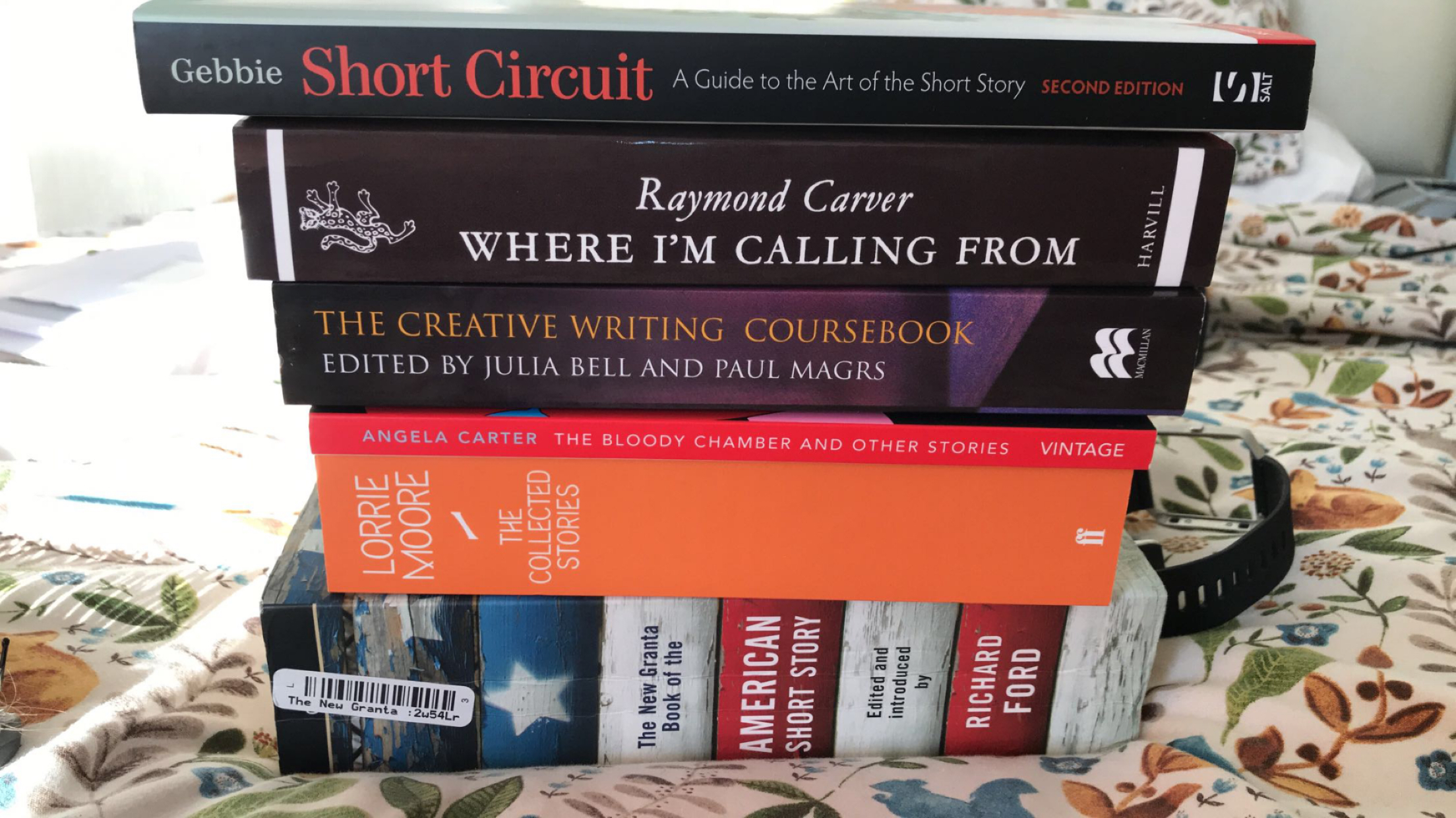
Fake pockets? Not again!

Furthermore, the lack of pockets, reportedly due to production lines wishing to save material and labour on a basic component you can easily learn to make on YouTube, means women have to carry a bag. For anyone who knows me, I blatantly refuse to carry a purse or a handbag, simply because I cannot abide them (a handbag?!): uncomfortable, a nuisance, easy to leave somewhere. I do hope clothing chains do not see the micro hanndbag as an opportunity to skimp on material costs. But when far too many jeans have only two functioning back pockets, sometimes with the mocking parody of fake pockets (who’s idea was that?!), personal security is a major concern. The most common damage to phones is through dropping them down toilets.

I say all this but seeing stunning outfits on Instagram and perfect styles beautifully put together is something I totally admire. However, I cannot help but wonder whether she’s comfortable.

Miscellaneous

Diary 2.0: A Fresh Page

Hi! Nice to make your acquaintance! You can call me Captain Hetty. Welcome to my blog.

I am in no sense pretentious

Over the past few years, I have been trying to keep a diary, but between university work, a part-time job and pretending to keep a social life of sorts, I have failed miserably. So what better way to keep up with recording my life than a blog? (Famous last words?)

“Who I am?” I hear you ask! Well, like any other sane being, I am a big fan of cats. And dogs. I grew up with three cats and later a dog. Since our yorkie sadly passed away, I am ‘pet-broody’, so there is a 99% chance I will steal your pets if you’re not careful!

This is Maurice, he will probably crop up now and again

Kidnapping threat aside, I am also from the South West and have moved down even further South to study English and History at undergraduate: Don’t worry though, I am in no sense pretentious. In the same way Hamlet’s inability to act was his fatal flaw, writing is mine. I know, who takes humanities and can’t even write? Well, that would apparently be me. It is true, ever since I first encountered exams, my love for writing and reading has been very much neglected, I am ashamed to say. But have no fear, this semester I am going through a spiritual quest to find my inner writer again.

Talking about my inner writer, this semester I am taking creative writing. By accident. Turns out selecting a ‘Short Stories’ module because you think there will be less reading has its comeuppance when you’re the one writing the stories! As I haven’t done creative writing in half a decade, I need all the practise I can get my hands on. Therefore, I hope to use this blog as a diary, place to air some stories, rants alike. And I hope you will join me on the way!

Short stories? What could go wrong!